
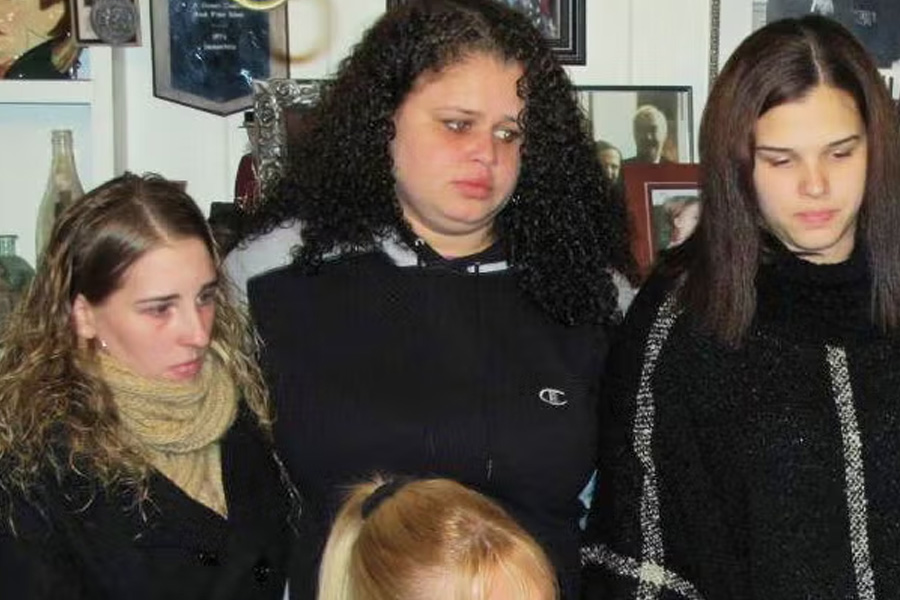
A name carried through grief, persistence, and public memory
When I look at Sheree Gilbert’s story, I do not see a simple biography. I see a life shaped by pressure, loss, and the stubborn force of memory. Sheree Gilbert became publicly known because of her sister Shannan Gilbert, but her own presence has grown into something larger than a family footnote. She has stood at the edge of a storm and kept speaking, even when the wind never really stopped. That is not a small thing. It takes nerve to remain visible when the world keeps turning your pain into a headline.
Her public identity is tied to one of the most closely watched true crime cases in recent memory. Yet the deeper story is not just about a disappearance or a criminal investigation. It is about a sister who refused to let her family be flattened into a case file. It is about grief that kept changing shape, then hardened into advocacy, then became a kind of public duty. Sheree Gilbert has lived inside that duty for years.
The family history that keeps echoing forward
The Gilbert family story is marked by instability, conflict, and loss, but also by fierce attachment. Sheree Gilbert grew up in a household that faced constant strain. Money was tight. Movement was frequent. Privacy was limited. In families like that, children often become early historians, reading moods before they can read books. The oldest child especially learns how to stand still when everything else moves.
That background matters because it helps explain why Sheree Gilbert eventually became one of the most visible voices connected to her sister Shannan’s case. She did not appear out of nowhere as a commentator. She emerged from inside the family itself, carrying the burden of firsthand memory. The bonds between the Gilbert sisters were complicated, but they were real. Those ties gave her advocacy a human center that no press conference or documentary can replace.
The family would face more tragedy in 2016, when Mari Gilbert was killed by another daughter during a severe mental health crisis. That event added a second deep wound to an already broken family structure. It also widened the public’s understanding of the Gilberts. Their story was never only about one missing person. It was also about trauma compounding over time, each loss pulling on the next like a thread snagging on rough cloth.
Shannan Gilbert, Gilgo Beach, and the widening of the case
Shannan Gilbert’s disappearance on Long Island in 2010 became the event that pulled the Gilgo Beach investigation into the open. The facts of that night remain central: a frantic emergency call, confusion, fear, and a search that uncovered far more than anyone expected. What began as one missing person case widened into one of the most infamous investigations in the country.
For Sheree Gilbert, this was not an abstract development. It was the beginning of a long, exhausting public confrontation with uncertainty. Shannan’s remains were later found, but the official interpretation of her death has remained controversial in the family’s view. That disagreement matters because it kept the story from settling into a clean ending. Instead, it kept reopening. Like a door that never quite latches, the case continued to swing back into view.
I think that is one reason Sheree Gilbert’s presence in public conversations has remained so durable. She has not allowed the case to be reduced to a true crime puzzle. She keeps reminding audiences that behind every forensic debate is a sister, a mother, and a family trying to hold on to meaning while institutions argue over conclusions.
Public advocacy as a form of endurance
Sheree Gilbert’s advocacy has taken many forms. She has spoken in interviews, appeared in documentary discussions, and used social media to keep attention on the case. Her role is not glamorous. It is repetitive, emotional, and often thankless. That repetition is part of what gives it power.
She administers a public Facebook page dedicated to Shannan’s memory, and that space functions like a small lighthouse in rough weather. It marks anniversaries. It shares case updates. It gathers people who still care. In an online landscape that often rewards noise over substance, her posts feel purposeful. They are not performed for spectacle. They are structured like reminders, each one saying that the story is still here, still unfinished.
Recent developments have made that work even more visible. After the arrest of Rex Heuermann in connection with the Gilgo Beach murders, Sheree Gilbert publicly called for fresh scrutiny of Shannan’s case and for a more transparent review of what happened. Later, when the case moved toward a guilty plea phase, the wider public conversation intensified again. For Sheree, those developments were not just breaking news. They were proof that time had not closed the wound. It had only made it deeper in some places and sharper in others.
The weight of mental health in the Gilbert story
One of the hardest parts of this family history is the role of mental illness. It is impossible to talk honestly about the Gilberts without acknowledging how mental health crisis changed their lives. Mari Gilbert’s death brought that reality into even sharper focus. The family’s public image became intertwined with a painful lesson about care, instability, and the devastating consequences of untreated illness.
Sheree Gilbert has been careful about what she shares publicly, and that caution makes sense. Families who live through repeated trauma often learn to guard the last pieces of ordinary life they still have. What stands out is not oversharing but restraint. She speaks when it matters. She steps back when the noise gets too loud. That balance gives her public voice a certain gravity. It is the gravity of someone who has seen how quickly private pain can become a public spectacle.
I read her advocacy as a form of boundary setting as much as a form of protest. She will not let the family be turned into a caricature. She will not let every detail become available for consumption. That resistance itself is part of the story.
New dimensions in the public record
The broader Gilgo Beach investigation has continued to produce new chapters, and those chapters also reshape how Sheree Gilbert is understood. The 2025 identification of additional remains near the same area expanded the public picture of the case, even while authorities worked to determine whether those deaths were connected to the serial killings. That kind of development matters because it keeps the region, the investigation, and the family’s concerns in active circulation.
There are also legal threads that show how long the family has continued to press its claims. Civil actions tied to Shannan and Mari Gilbert demonstrate that the family did not leave their fight at the level of interviews and public statements. They kept moving through courts as well, which gives the story another layer of endurance. Advocacy was never only emotional. It was procedural too.
Another important detail is family structure. Sheree Gilbert is not the only sister, and the complexity of the family matters. Mari had four daughters, and the relationships among them were shaped by both loyalty and strain. There were moments of conflict, moments of repair, and moments that were probably too difficult for the public to fully understand. That complexity makes the family story feel lived in, not invented for television.
Why Sheree Gilbert still matters in 2026
I think Sheree Gilbert matters because she shows what it looks like when a private person is pushed into public responsibility and decides not to disappear under it. She has not become a celebrity in the usual sense. She has become something rarer: a witness with a long memory. Her presence keeps the family story from drifting into the fog of old cases that people mention briefly and forget.
She represents a kind of advocacy that is intimate rather than polished. It is built from birthdays, anniversaries, court dates, and the daily effort of not letting grief harden into silence. That kind of work rarely gets applauded the way it should. It is too slow, too personal, too honest.
Still, the voice remains. The page stays active. The questions keep returning. And Sheree Gilbert continues to stand where the family story meets the public record, holding both together with an attention that is steady, unsentimental, and deeply human.
FAQ
Who is Sheree Gilbert?
Sheree Gilbert is the eldest sister in the Gilbert family and a public advocate connected to the disappearance and death of her sister Shannan Gilbert.
Why did Sheree Gilbert become widely known?
She became widely known because her sister Shannan’s disappearance helped draw attention to the Gilgo Beach case, and Sheree later became one of the family’s most visible public voices.
What is Sheree Gilbert’s role today?
She continues to speak publicly, share case updates, and maintain a social media presence focused on remembrance and accountability.
How is the Gilgo Beach case connected to her family?
Shannan Gilbert’s disappearance led investigators into the wider Gilgo Beach area, where other victims were found, turning the case into a much larger investigation.
What happened to Mari Gilbert?
Mari Gilbert was murdered in 2016 during a severe mental health crisis involving another daughter in the family.
Does Sheree Gilbert keep her private life public?
No. She has kept many personal details private, including her residence, education, and marital status.
Has Sheree Gilbert spoken about recent case developments?
Yes. She has remained active in public discussions, especially after major developments in the Gilgo Beach investigation and the arrest tied to the case.
Why does Sheree Gilbert continue to speak out?
She continues because her family’s story is still unresolved in the public mind, and she uses her voice to keep attention on truth, memory, and accountability.