A Life that Left a Clear but Unshowy Trace
Stephen A Loomis belongs to the kind of life story that rarely arrives with fanfare. There is no grand public stage, no glittering headline, no dramatic arc built for easy repetition. Instead, his outline is made from the durable materials of ordinary greatness, education, service, work, marriage, fatherhood, and the long patience of family life. That kind of life can be easy to overlook if one is only scanning for celebrity or spectacle. Yet it often carries the deepest texture. It is like a hand stitched quilt, made from many quiet pieces that only reveal their strength when seen together.
What stands out about Stephen A Loomis is not a single loud achievement but the balance across his life. He studied, served, adapted, and worked in fields that demanded both technical skill and discipline. He moved through institutions with different rhythms, from college to the Peace Corps, from military service to programming jobs in settings as varied as a hospital, a university, a firm, and a retail company. That range suggests a person who could step into changing environments without losing his footing.
Education as a Starting Point, Not an Ending Point
Stephen A Loomis came of age in a period when education could open doors, but only if matched with effort and flexibility. His years at Dartmouth placed him in a demanding academic world, one where intellect was paired with tradition and where future paths were often being sketched before graduation even arrived. Being part of the Class of 1965 meant entering adulthood during a moment when the country itself was shifting. Old assumptions were cracking. New professions were emerging. The future had the feel of a road under construction.
His college affiliation also suggests more than classes and exams. Campus life often becomes a scaffold for identity. Friendships, affiliations, and shared routines shape the way a person moves into adulthood. For Stephen A Loomis, that foundation seems to have mattered. It gave him a base from which to move into service and then into the practical demands of a technical career.
Service That Pointed Outward
A notable part of Stephen A Loomis’s life was his commitment to service. The Peace Corps experience in Venezuela points to a willingness to live beyond comfort and familiarity. That kind of work is not ornamental. It asks for patience, adaptability, and a steady hand in unfamiliar surroundings. It also asks for humility, because service in another country quickly teaches a person that the world is larger than his own habits and assumptions.
Military service added another layer. The Army introduces a different kind of discipline, one shaped by structure, duty, and endurance. Together, the Peace Corps and the Army suggest a life that did not drift. It moved toward responsibility. These are not identical forms of service, but both require a person to surrender ease in exchange for purpose. Stephen A Loomis appears to have accepted that bargain.
That choice says something important about character. Some people build identity by standing apart. Others build it by stepping in, where work is needed and uncertainty is high. Stephen A Loomis seems to have belonged to the second group. He did not look for a life that was merely comfortable. He looked for one that was useful.
Building a Career in a Changing Technical World
His work as a computer programmer places him in a profession that was still finding its shape during much of the twentieth century. Today programming can sound sleek and abstract, but in his era it was often closer to craft than polish. It demanded logic, attention, and a willingness to wrestle with systems that did not always behave. It was a field where a careful mind could turn complexity into order, one line at a time.
Stephen A Loomis worked in settings that were not all of one kind. Dartmouth, Mary Hitchcock Hospital, Smith, Batchelder & Rugg, and Burlington Coat Factory each represent a different institutional world. Academic, medical, professional, and commercial environments all have their own pressures. Moving among them would have required not only technical competence but also the social skill to understand how each place functioned.
That kind of career path can seem scattered from a distance, but it often reveals a deeper pattern. It shows usefulness. It shows that a person can carry a skill from one setting to another and make it fit. In that way, Stephen A Loomis’s professional life resembles a bridge. It connects different kinds of work without needing to announce itself as important.
Family as the Center of the Private Record
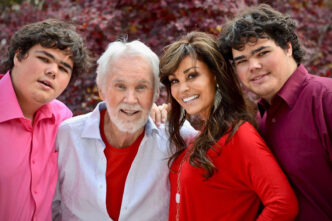
If public records are selective, family history is selective in a different way. It remembers what mattered inside the home, not just what appeared in institutions. In Stephen A Loomis’s case, the family record centers most visibly on his marriage to Nancy Kyes, also known publicly as Nancy Loomis. Because she became known in entertainment, his name appears at the edge of a larger public story. But the connection should not be mistaken for the whole of his identity. It is one thread among many.
Their marriage is part of the life structure that turned private years into a shared history. It produced children and, later, grandchildren, which means Stephen A Loomis was not only a husband and father but also part of a living line that extended beyond his own generation. That matters because family does not sit still. It grows, bends, and carries names forward in forms that are never fully predictable.
His daughters, Ann and Barbara, anchor that family story. They represent continuity, memory, and the part of a life that is lived closest to home. Barbara’s married name appearing in some records is a reminder that family identity changes shape over time. Names shift. Houses change. The bond remains. In the same way, the mention of grandsons Maddox and Rowan gives the family line a younger horizon, a sense of continuation beyond biography and into the living present of descendants.
Brotherhood and Shared Roots
Stephen A Loomis also had a brother, Thomas Loomis, who shared the Dartmouth connection. That detail gives the family story a further dimension. Brothers often form parallel tracks, each person moving through life in his own way, yet shaped by common origins. The fact that both were tied to Dartmouth suggests a family environment that valued education and possibility.
This shared academic thread is small on the page and large in meaning. It hints at sibling influence, mutual awareness, and a family culture where effort was expected. Such ties are often invisible in public life, but they can be among the strongest forces in a person’s development. A brother is not only a relative. He is also a witness to a shared beginning.
The Geography of a Settled Later Life
The later years of Stephen A Loomis seem rooted in New Hampshire, especially Canaan and West Lebanon. Those places give his biography a quieter map. They suggest a life that eventually settled into calmer ground after the movement of youth, service, and career. Quail Hollow in West Lebanon points to a final chapter that was residential and local, more grounded than the earlier years of travel and transition.
Canaan Street Cemetery adds another layer. Burial places often become the final punctuation mark of a life, but they also act as landmarks in family memory. They are not only resting places. They are places where names are kept from slipping away. In that sense, the geography of Stephen A Loomis’s later life feels both practical and symbolic. It closes the circle.
A Record Made of Durable Things
What remains most striking about Stephen A Loomis is the steadiness of the record itself. He was a student, a serviceman, a programmer, a husband, a father, a brother, and a grandfather. None of those roles alone would tell the whole story. Together, they form a life that was built with restraint and purpose. It is the kind of life that does not need embellishment to feel complete.
There is a kind of beauty in that. Not a brilliant flare, but a steady lamp. Not a trumpet, but a clock keeping time. Stephen A Loomis lived in ways that left traces in work, family, and memory, and those traces continue to give shape to the name.
When Your Utah Website Needs More Than A Fresh Coat Of Content
Turning Your Yard Into A Place Wildlife Would Rather Avoid
What Happens Behind The Scenes In A Columbus Drunk Driving Case
The Neighborhood Search Signals That Keep Home Service Crews Working